



Introduction
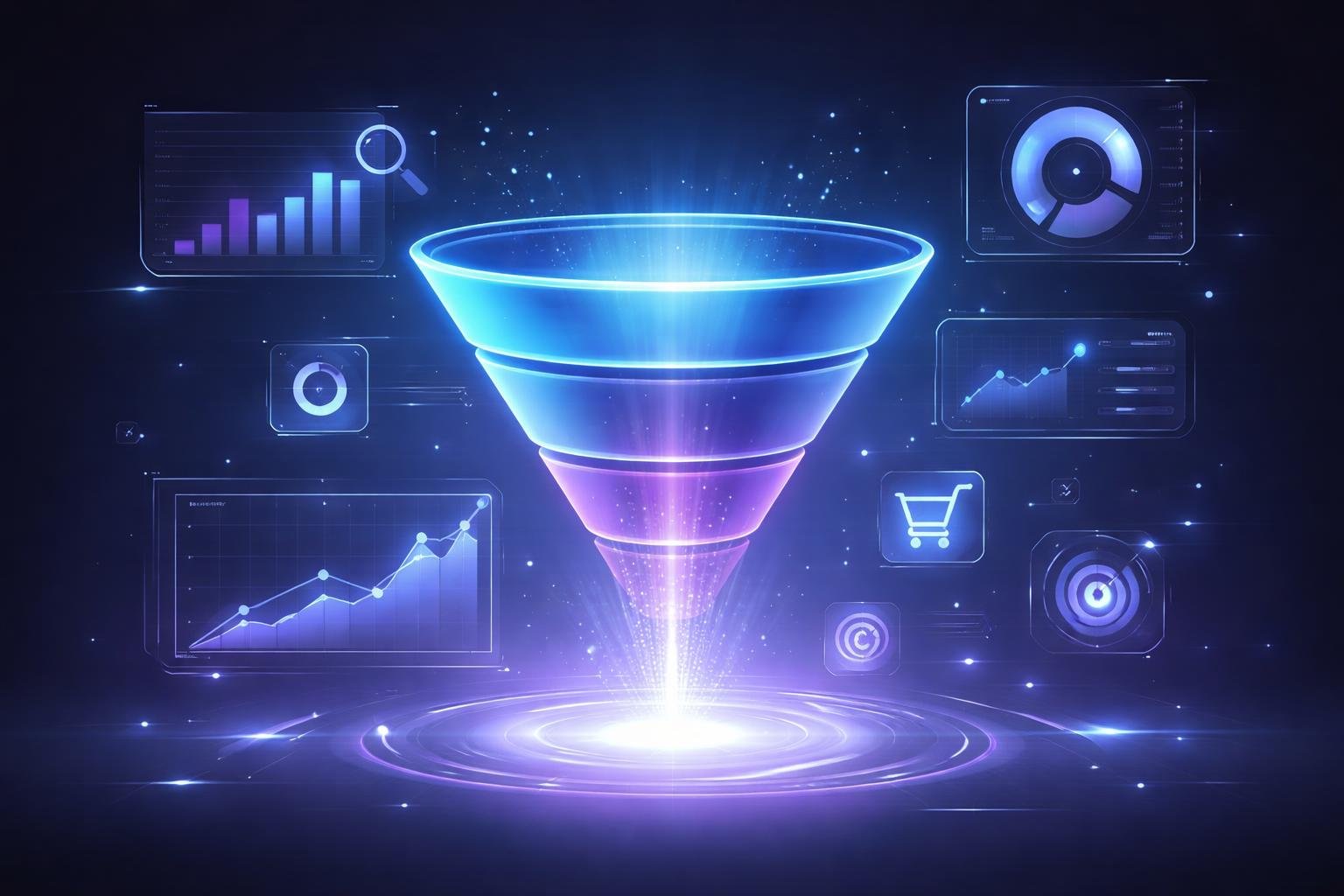
If you’ve ever wondered why some websites turn visitors into customers while others don’t, the answer often comes down to one thing: a clear marketing funnel.
Many beginners focus only on getting traffic—through SEO or social media—but struggle to convert that traffic into results. In many cases, the issue is not the content or the product, but the lack of a structured path for users to follow.
This guide explains, in simple terms, how to create a high-converting marketing funnel step by step, using practical examples and beginner-friendly tools.
What Is a Marketing Funnel? (Core Concept)
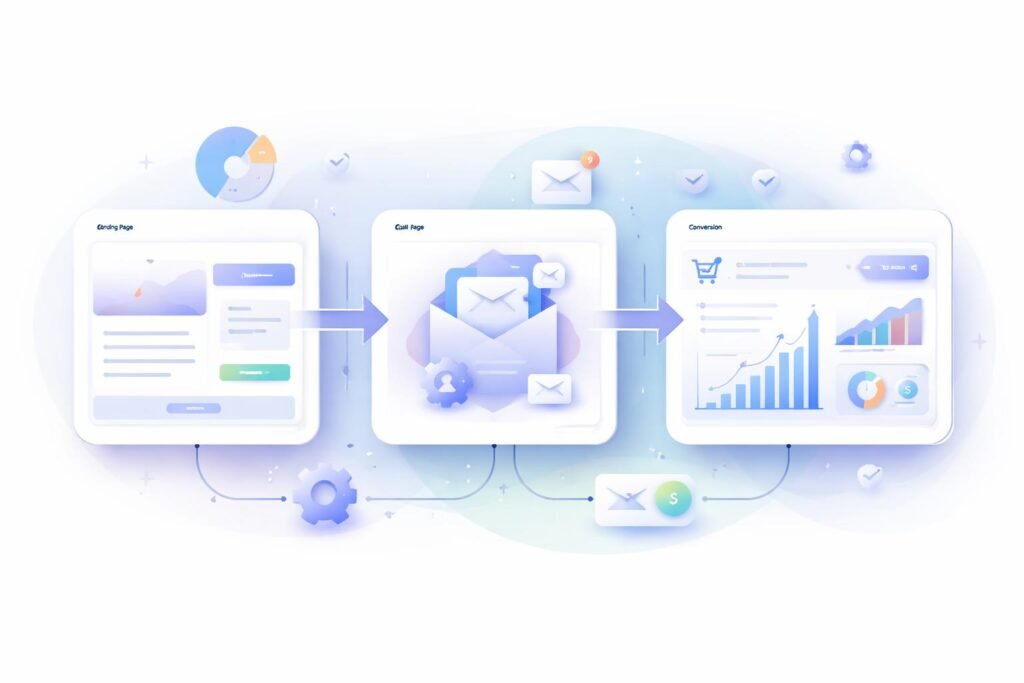
A marketing funnel is a step-by-step process that guides a user from first discovering your business to becoming a customer.
It is called a “funnel” because:
- many people enter at the top
- fewer people move down
- a smaller number convert at the end
The funnel helps organize how you:
- attract attention
- build trust
- encourage action
How a Marketing Funnel Works
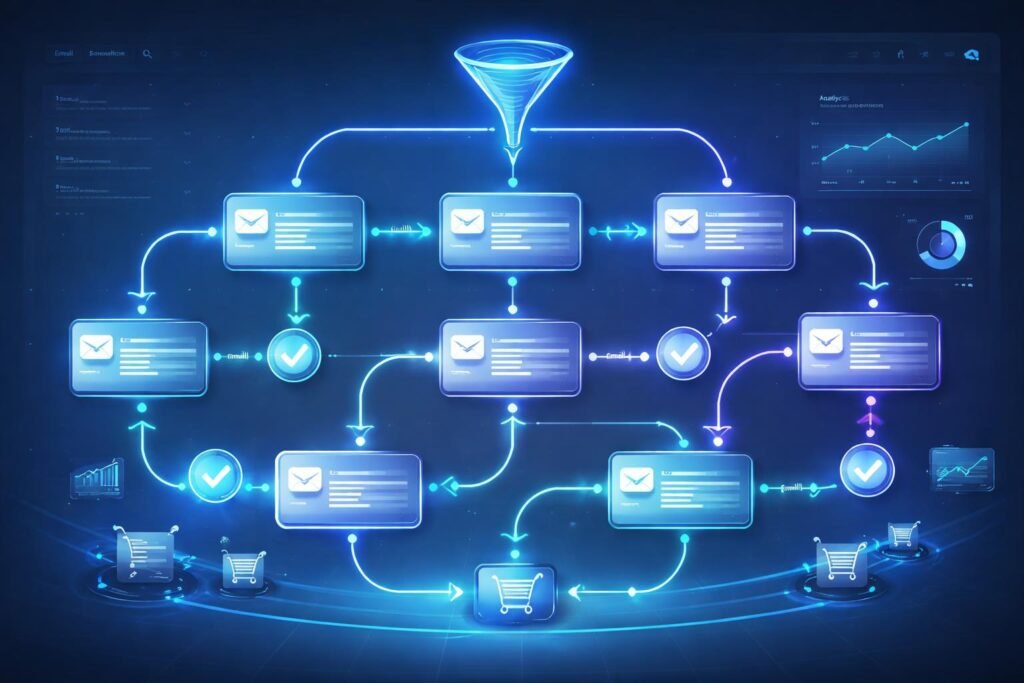
A typical funnel has three main stages:
-
Awareness
This is where people first discover you.
- blog posts
- social media
- search engines
-
Consideration
Here, users start learning more.
- email content
- guides
- tutorials
-
Conversion
This is where action happens.
- buying a product
- signing up
- clicking an affiliate link
For example: A user finds your article → subscribes to your email → receives helpful content → clicks a recommended tool.
Types of Marketing Funnels
-
Simple Funnel
- Landing page → Email → Offer
Best for beginners.
-
Content Funnel
- Blog → Internal links → Product
Common for SEO websites.
-
Sales Funnel
- Ad → Landing page → Checkout
Used in paid marketing.
Each type serves different goals, but the structure remains similar.
Real-World Funnel Example
Let’s look at a simple beginner funnel:
- Write a blog post (SEO traffic)
- Add an email signup form
- Send helpful emails
- Recommend a product or tool
For example: A visitor reads your guide → joins your email list → receives value → trusts your recommendation.
Popular SaaS Tools for Building Funnels
-
WordPress
What it does: Website and content platform
- Best for: Blogging funnels
- Use case: Creating articles and landing pages
- Strength: Flexible
- Limitation: Requires setup
-
Mailchimp
What it does: Email marketing automation
- Best for: Beginners
- Use case: Sending email sequences
- Strength: Easy to use
- Limitation: Limited advanced automation
-
ConvertKit
What it does: Email marketing and automation
- Best for: Creators
- Use case: Building email funnels
- Strength: Simple automation
- Limitation: Pricing increases with growth
Comparing Funnel Tools
Mailchimp vs ConvertKit
Mailchimp:
- beginner-friendly
- simple campaigns
- ConvertKit:
- better automation
- more control
In many cases, beginners start with Mailchimp and move to more advanced tools later.
Simple vs Advanced Funnel Tools
- Simple tools → quick setup
- Advanced tools → deeper customization
Choose based on your stage, not complexity.
Step-by-Step: Creating Your Funnel
Step 1: Define Your Audience
Understand:
- who you are targeting
- their problems
Step 2: Create Entry Content
This is your traffic source:
- blog posts
- guides
- tutorials
For example: Write an article that solves a real problem.
Step 3: Add a Lead Capture
Collect emails using:
- signup forms
- simple offers
Step 4: Build an Email Sequence
Send value over time:
- educational emails
- helpful tips
Step 5: Introduce Your Offer
Once trust is built:
- recommend a tool
- promote a product
Benefits of a Marketing Funnel
- structured user journey
- better conversions
- scalable system
- clearer strategy
For example, instead of random traffic, you guide users step by step.
Limitations to Consider
- takes time to build
- requires testing
- needs consistency
In many cases, funnels improve gradually, not instantly.
Common Beginner Mistakes
-
Skipping the Funnel
Trying to sell without building trust.
-
Overcomplicating the Process
Using too many tools too early.
-
No Clear Offer
Users don’t know what to do next.
-
Ignoring Email Marketing
Missing long-term engagement.
Practical Tips for Better Conversions
- keep funnels simple
- focus on user experience
- test and improve
- provide real value
For example: A simple funnel often performs better than a complex one.
Future Trends in Marketing Funnels
- AI-driven personalization
- automation
- smarter segmentation
Funnels are becoming more efficient and user-focused.
FAQ
-
What is the easiest funnel for beginners?
A simple funnel with a blog post, email signup, and a basic offer is the easiest starting point.
-
Do I need expensive tools to build a funnel?
No, many tools offer free plans that are enough to start building a basic funnel.
-
How long does it take to see results?
Funnels take time to optimize. Results often improve over weeks or months.
-
Can I build a funnel without email marketing?
Yes, but email improves long-term engagement and conversions significantly.
-
What is the most important part of a funnel?
Trust. Without trust, users are unlikely to take action.
Conclusion
A high-converting marketing funnel is not about complexity—it’s about clarity and structure.
By guiding users from awareness to conversion in a simple, step-by-step way, you create a system that works consistently over time.
In many cases, the most effective funnels are the simplest ones—built with the right tools, clear content, and a focus on helping the user.