




Introduction
Content marketing is often recommended as one of the most effective ways to grow an online business. But many beginners quickly realize that publishing content alone does not guarantee results.
In many cases, people create blog posts or videos without a clear strategy. They might get some traffic, but little to no conversions. The missing piece is understanding how to create content that not only attracts visitors—but also turns them into customers.
This guide explains practical content marketing strategies that help you generate both traffic and sales, using a clear and beginner-friendly approach.
What Is Content Marketing? (Core Concept)
Content marketing is the process of creating and sharing valuable content to attract and engage an audience.
Instead of directly selling, you provide useful information that builds trust over time. This can include:
- blog posts
- tutorials
- guides
- videos
For example, a website that publishes helpful articles about digital marketing can attract readers who are interested in improving their skills—and later recommend tools or services.
How Content Marketing Works

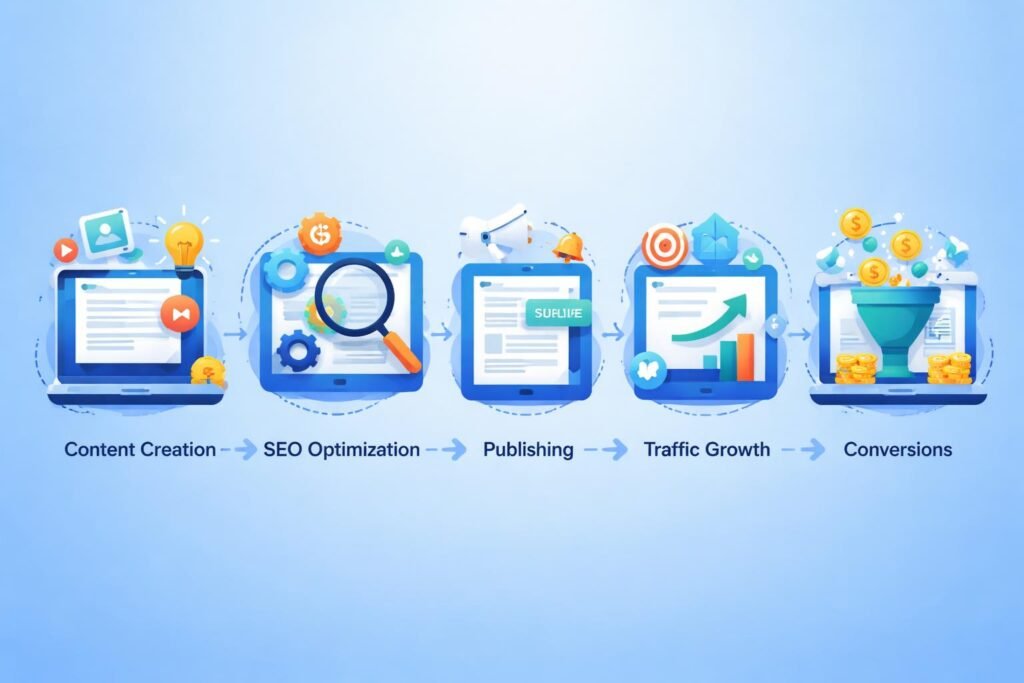
Content marketing follows a simple system:
- Attract traffic (through SEO, social media)
- Engage readers (with valuable content)
- Convert visitors (into subscribers or customers)
For example:
- A user searches on Google
- Finds your article
- Reads your guide
- Clicks a recommended tool
Each step is important. Without engagement, traffic doesn’t convert.
Types of Content That Drive Results
-
Educational Blog Posts
These answer specific questions and target search intent.
Example:
- “How to Start an Online Business”
-
Step-by-Step Guides
Detailed guides perform well because they solve real problems.
Example:
- tutorials for beginners
-
Comparison Content
Helps users make decisions.
Example:
- Tool A vs Tool B
-
List-Based Content
Curated content is easy to read.
Example:
- “Best tools for…”
Each type serves a different purpose, and combining them creates a strong content system.
Real-World Use Cases
Example 1: Blog Growth Strategy
A beginner blogger:
- writes SEO-focused articles
- publishes consistently
- builds traffic over time
Eventually, they monetize through affiliate links.
Example 2: SaaS Business Content
A SaaS-focused website:
- creates tool reviews
- publishes tutorials
- explains use cases
This attracts users who are ready to buy.
Example 3: Educational Platform
A content creator:
- shares guides
- builds an audience
- promotes services or products
Traffic vs Conversions (IMPORTANT)
Traffic
- number of visitors
- driven by SEO and sharing
Conversions
- actions taken (signup, purchase)
One common mistake beginners make is focusing only on traffic.
For example:
- thousands of visitors
- but no email list or sales
The goal is to balance both.
Popular SaaS Tools for Content Marketing
-
WordPress
- What it does: Website publishing platform
- Best for: Bloggers and content creators
- Use case: Writing and managing articles
- Strength: Flexible and scalable
- Limitation: Requires setup
-
Canva
- What it does: Design tool
- Best for: Visual content
- Use case: Blog images and social media
- Strength: Easy to use
- Limitation: Limited advanced design features
-
Google Analytics
- What it does: Tracks traffic and behavior
- Best for: Performance analysis
- Use case: Understanding what content works
- Strength: Detailed insights
- Limitation: Can feel complex
Comparing Content Tools
Simple vs Advanced Tools
- Simple tools → easier to start
- Advanced tools → more features
Beginners should focus on ease of use.
Free vs Paid Tools
- Free → good for learning
- Paid → better scalability
In many cases, free tools are enough to begin.
Strategies That Actually Work
-
Focus on Search Intent
Create content based on what people are searching for.
For example:
- beginner guides
- problem-solving articles
-
Publish Consistently
Consistency builds trust and traffic.
- 1–2 articles per week is enough
-
Create High-Value Content
Quality matters more than quantity.
- clear explanations
- practical steps
-
Use Internal Linking
Link your articles together.
This:
- improves SEO
- increases time on site
-
Add Conversion Points
Every article should guide the reader.
For example:
- email signup
- tool recommendation
Benefits of Content Marketing
- tool recommendation
- Benefits of Content Marketing
- long-term traffic
- builds authority
- low cost
- scalable
Content can continue generating traffic for months or years.
Limitations to Consider
- takes time to see results
- requires consistency
- needs strategy
In many cases, results appear after several months.
Common Beginner Mistakes
-
Publishing Without Strategy
Content should have a clear goal.
-
Ignoring SEO
Without SEO, content may not get traffic.
-
No Conversion Plan
Traffic alone is not enough.
-
Inconsistency
Irregular posting slows growth.
Practical Tips for Better Results
- start with keyword research
- focus on beginner-friendly topics
- write clearly and simply
- track performance
For example, update articles that perform well to improve results.
Future Trends in Content Marketing
- AI-assisted content creation
- personalized content
- interactive formats
- data-driven strategies
These trends are making content marketing more efficient.
FAQ
-
How long does content marketing take to work?
Content marketing usually takes a few months to show results. SEO-driven traffic grows gradually over time.
-
Do I need to post every day?
No, consistency matters more than frequency. One or two high-quality articles per week is enough.
-
Can content marketing generate sales?
Yes, when combined with a clear strategy and conversion points, content can lead to sales.
-
What type of content works best for beginners?
Educational and problem-solving content works best because it provides value and attracts targeted traffic.
-
Do I need expensive tools to start?
No, many free tools are sufficient for beginners. You can upgrade as your needs grow.
Conclusion
Content marketing is not just about creating content—it’s about creating the right content with a clear purpose.
By focusing on search intent, consistency, and conversions, you can build a system that generates both traffic and sales over time.
In many cases, the difference between success and failure is not effort, but strategy.