




Introduction
Content creation has always required time, creativity, and consistency. From writing blog posts to producing videos and managing social media, creators often handle multiple tasks at once.
In many cases, the challenge is not a lack of ideas—but the time and effort needed to turn those ideas into finished content. This is where AI tools are beginning to change the process.
Rather than replacing creators, AI is helping them work faster, organize ideas more effectively, and maintain consistency. For beginners and professionals alike, understanding this shift is essential for staying competitive in today’s digital environment.
What AI Tools Mean in Content Creation (Core Concept)
AI tools in content creation are software systems designed to assist with tasks such as:
generating ideas
drafting content
editing and improving text
optimizing for SEO
Instead of starting from scratch, creators can now begin with structured suggestions, outlines, or drafts.
For example, a blogger can use AI to generate an article outline, then refine and personalize the content. The goal is not to remove human creativity, but to support it.
How AI Is Transforming Content Workflows
Traditionally, content creation followed a manual process:
Research a topic
Create an outline
Write the content
Edit and optimize
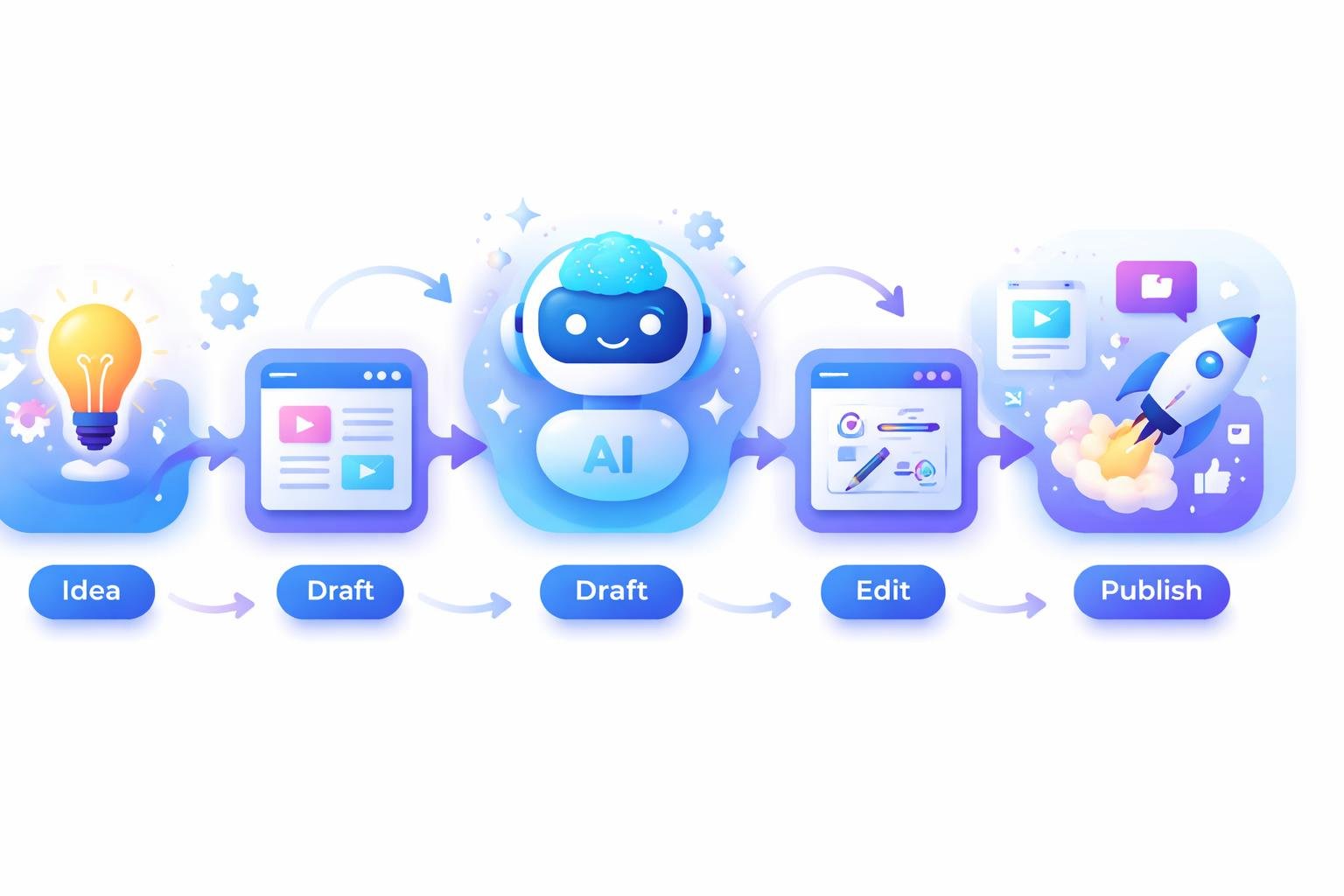
With AI-assisted workflows, this process becomes more efficient:
Generate ideas using AI
Create a structured outline quickly
Draft content with assistance
Edit and refine manually
In many cases, what used to take several hours can now be done in less time, while still maintaining quality.
Types of AI Tools in Content Creation
1. Writing Assistants
These tools help generate:
blog drafts
article outlines
marketing copy
They are especially useful for overcoming writer’s block.
2.Editing and Optimization Tools
Used to:
improve readability
fix grammar
optimize tone
These tools help refine content rather than create it.
3. Idea Generation Tools
Help creators:
discover topics
generate headlines
find content angles
This is valuable for maintaining consistency.
Real-World Use Cases
Example 1: Blogging
A blogger may:
use AI to generate an outline
write the article manually
use AI again to improve clarity
This reduces time spent on planning.
Example 2: YouTube Script Writing
Content creators can:
generate script ideas
structure videos
create engaging introductions
For example, instead of starting from scratch, a creator can begin with a structured script and customize it.
Example 3: Social Media Content
Marketers often use AI to:
generate captions
create content ideas
plan posting schedules
This helps maintain consistency across platforms.
Example 4: Marketing Copy
Businesses can use AI to:
draft ad copy
create email campaigns
test messaging variations
In many cases, this improves speed and experimentation.
Traditional vs AI-Assisted Content Creation

Traditional Approach
time-intensive
requires full manual effort
slower production
AI-Assisted Approach
faster workflows
idea support
easier scaling
However, speed does not replace creativity. AI works best when combined with human input.
How Creators Use AI in Practice
In real scenarios, creators rarely rely entirely on AI.
Instead, they use it as a support system:
to generate starting points
to refine existing content
to speed up repetitive tasks
For example, a marketer might:
draft ideas with AI
rewrite content in their own voice
adjust messaging based on audience
This balance is key to maintaining authenticity.
Benefits of Using AI Tools in Content Creation
-
Speed
AI reduces the time needed to produce content.
-
Consistency
It helps maintain a regular publishing schedule.
-
Idea Generation
Creators never run out of topics.
-
Efficiency
Repetitive tasks are simplified.
Limitations of AI in Content Creation
-
Lack of Original Voice
AI-generated content may feel generic if not edited.
-
Over-Reliance
Depending too much on AI can reduce creativity.
-
Context Limitations
AI may not fully understand audience nuance.
-
Quality Variation
Not all outputs are accurate or useful.
One common mistake beginners make is publishing AI-generated content without reviewing or improving it.
Common Mistakes Beginners Make
-
Using AI Without Editing
This often leads to generic or low-quality content.
-
Expecting AI to Replace Creativity
AI supports creativity—it does not replace it.
-
Ignoring Audience Needs
Content should always be tailored to readers.
-
Overproducing Content
Focusing on quantity instead of quality.
Practical Tips for Using AI Effectively
use AI for outlines, not final drafts
always edit content manually
focus on clarity and value
maintain your unique voice
For example, start with AI-generated structure, then rewrite sections to match your tone.
Future Trends in AI Content Creation
AI tools are evolving quickly. Some trends include:
more personalized content suggestions
improved language understanding
integration with other marketing tools
In many cases, AI will become a standard part of content workflows rather than an optional tool.
FAQ
-
Can AI replace human content creators?
No, AI is a support tool. While it can assist with writing and ideas, human creativity and judgment are still essential for high-quality content.
-
Is AI-generated content good for SEO?
It can be, if properly edited and structured. Search engines prioritize helpful, original content, regardless of how it is created.
-
What is the best way to start using AI for content?
Begin with simple tasks like generating outlines or ideas. Gradually incorporate AI into your workflow as you become more comfortable.
-
Does using AI reduce content quality?
Not necessarily. When used correctly, AI can improve efficiency while maintaining quality. The key is human editing and oversight.
-
How can I avoid over-reliance on AI?
Use AI as a starting point, not the final product. Always add your own insights, examples, and voice.
Conclusion
AI tools are changing how content is created—but they are not replacing the role of the creator.
Instead, they are transforming workflows, making it easier to plan, draft, and refine content. For beginners and professionals alike, the key is to use AI thoughtfully.
In many cases, the most effective approach is a balanced one—combining AI efficiency with human creativity.